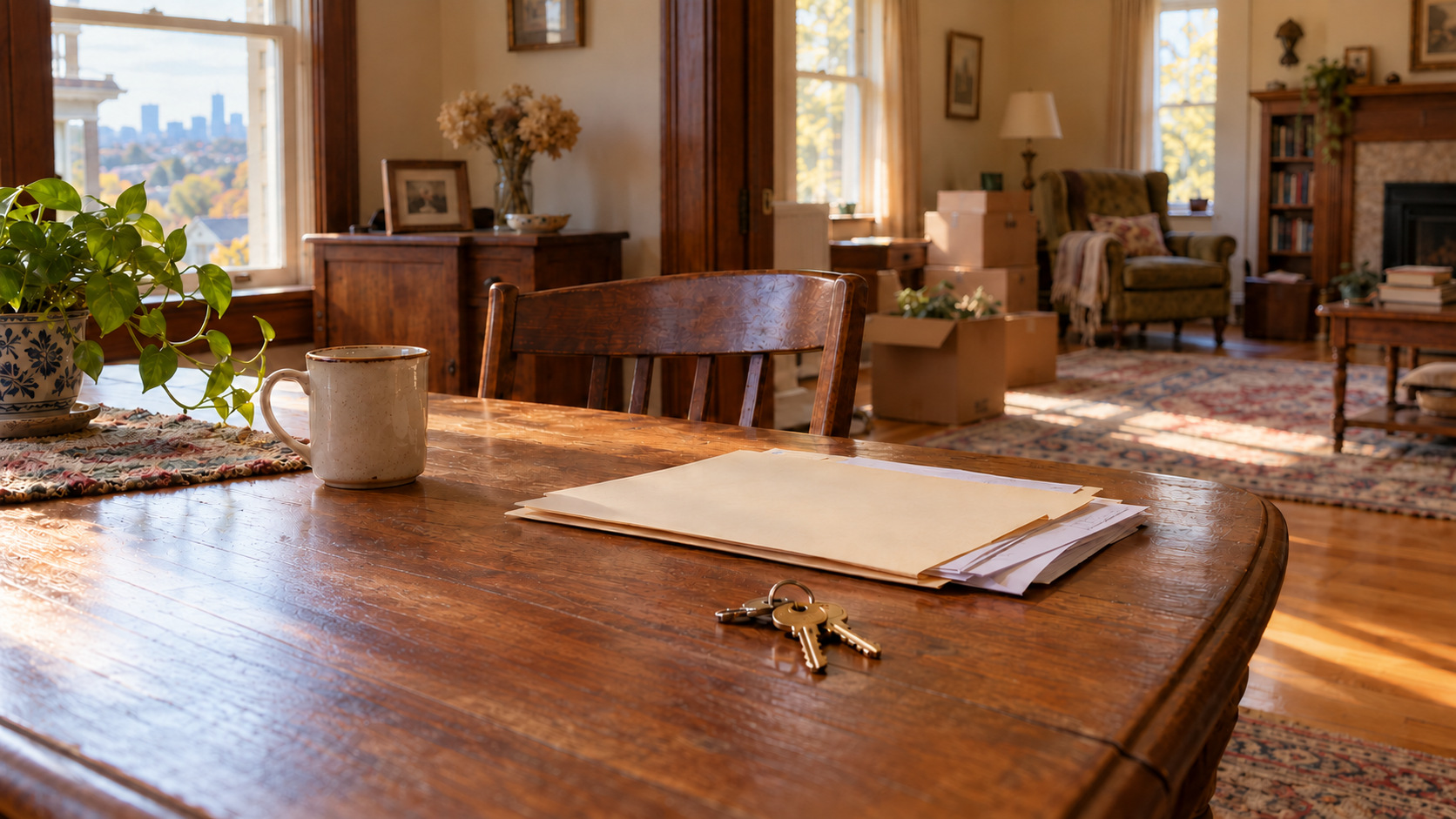
Inheriting a house can create both an opportunity and a long list of decisions.
The property may need repairs. Taxes and utilities continue. Personal belongings may still be inside. Several family members may be involved. The estate may still be going through probate.
Before deciding whether to keep, renovate, or sell the property, it helps to separate the legal questions from the property and financial questions.
Start with authority to sell
One of the first things to clarify is who actually has authority to make decisions about the property.
Depending on how the home was titled and how the estate is being administered, that may involve an executor named in a will, an administrator appointed for the estate, surviving owners, or heirs after the proper estate process.
This is not something a buyer should guess at.
Allegheny County’s Register of Wills provides probate information and forms for estates in the county, and specific legal questions should be handled by the estate’s attorney or another qualified professional.
Probate and the property sale are connected
Probate is the legal process used to administer the estate. The house is one asset within that process.
The estate may need to establish the personal representative’s authority, identify heirs and beneficiaries, address debts and expenses, file required documents, and determine how property will be distributed or sold.
That is why a house sale should be coordinated with the estate process rather than treated as a completely separate issue.
Pennsylvania inheritance tax
Pennsylvania inheritance tax depends largely on the relationship between the deceased person and the beneficiary.
Current state rates include:
- 0% for certain transfers to a surviving spouse and certain parent-child transfers
- 4.5% for direct descendants and lineal heirs
- 12% for siblings
- 15% for many other heirs, subject to exemptions
The tax generally becomes delinquent nine months after the date of death, and Pennsylvania provides a 5% discount for inheritance tax paid within three months of death.
The actual tax treatment can be more complicated, so estates should rely on an accountant, attorney, or other qualified professional rather than a property buyer for tax advice.
Multiple heirs can make the decision harder
Even when everyone gets along, different heirs may want different things.
One person may want to sell quickly. Another may want to renovate. Someone else may want to keep the house.
Before spending estate money on construction, it is worth agreeing on the objective, who has authority to make decisions, how the work would be funded, and who would manage the property while the estate still owns it.
Does the house need to be cleaned out first?
Not always.
If the plan is to list the property traditionally, removing personal belongings and improving presentation may be important.
For a direct sale, some buyers may be willing to purchase the property with certain contents remaining, depending on the agreement.
If the property is still part of an estate, however, make sure the appropriate person has authority to dispose of the contents before items are removed.
Should the estate renovate before selling?
Sometimes renovation makes financial sense.
If the house is in a strong location, the work is manageable, and the estate has the time and money to complete it properly, renovating before sale may produce a stronger result.
But a full renovation can also mean months of additional estate management, during which taxes, insurance, utilities, maintenance, and construction costs continue.
That tradeoff should be evaluated carefully.
Selling the property in its current condition
For some estates, selling as-is is a simpler path.
A renovation-focused buyer can evaluate the house based on its current condition, location, comparable sales, repair needs, and resale potential without requiring the estate to complete the full renovation first.
That convenience usually affects price because the buyer takes on the work and risk.
Vacant inherited properties need attention
If the house is empty, someone should still be responsible for monitoring it.
Vacant properties can face issues such as:
- security
- frozen pipes
- leaks
- insurance requirements
- yard maintenance
- code concerns
- utility costs
A property should not be left unattended simply because the estate has not decided what to do yet.
What Ben & Bash can help with
Ben & Bash can evaluate the real estate itself.
We can review the property condition, comparable sales, renovation needs, and project economics to determine whether it fits what we buy.
We cannot tell the estate who has legal authority to sell, how probate should be handled, or how inheritance tax should be allocated. Those questions belong with the appropriate legal and tax professionals.
If the estate has authority to sell and the property fits our criteria, we can evaluate it in its current condition.
Related guides
Frequently Asked Questions
Can an inherited house be sold before probate is finished?
That depends on the estate, ownership, and authority of the personal representative. The estate’s attorney should address the specific case.
Does Pennsylvania charge inheritance tax?
Yes. The rate depends on the beneficiary’s relationship to the deceased and any applicable exemptions.
Do all heirs have to agree?
That depends on ownership, estate documents, and legal authority. Specific estate disputes should be handled by the appropriate legal professional.
Do I have to renovate the inherited house?
No general rule requires an heir to renovate the property before selling it.
Can Ben & Bash evaluate the property before it is fully cleaned out?
Yes. An initial review can begin before a full renovation or clean-out.
Sources & Further Reading
- Pennsylvania Department of Revenue, Inheritance Tax
- Allegheny County, Wills and Orphans’ Court / Probate
- Pennsylvania Department of Revenue, Personal Income Tax Guide
https://www.pa.gov/agencies/revenue/resources/tax-types-and-information/inheritance-tax
https://www.alleghenycounty.us/Government/Court-Related/Wills-and-Orphans
https://www.pa.gov/agencies/revenue/forms-and-publications/pa-personal-income-tax-guide
Have a Pittsburgh-area property you are considering selling?
Send us the address and a few details. We will review the property and let you know if it fits what we are looking for.
Tell us about the propertyThis article is general educational information and is not legal, tax, or financial advice. Transaction requirements can vary by property and situation.