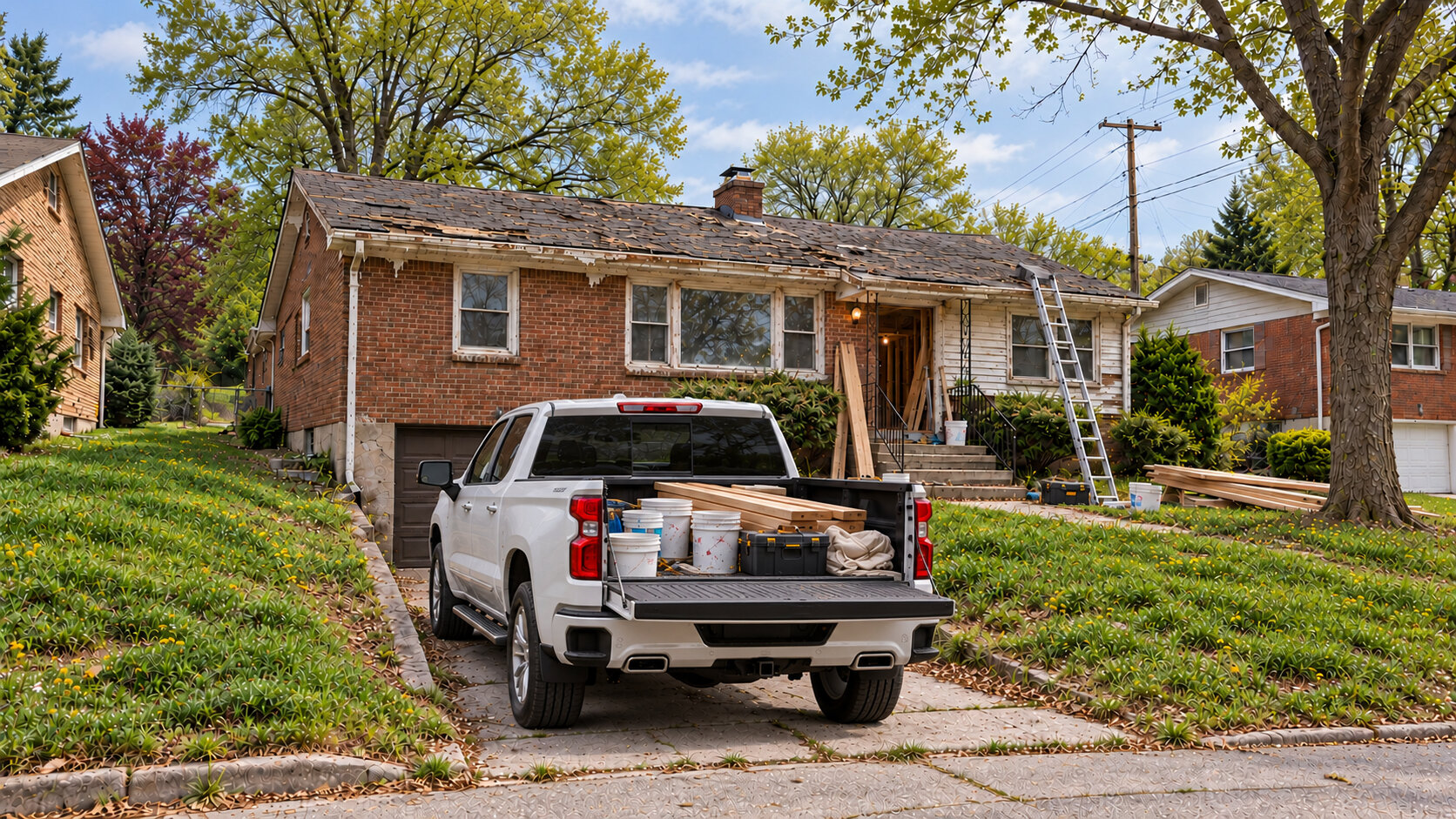
Many Pittsburgh-area houses do not have one single problem. They have several issues that add up.
An older roof, outdated electrical service, plumbing repairs, an aging furnace, water intrusion, foundation concerns, old windows, and an outdated kitchen can quickly turn what looked like a few repairs into a major renovation.
At that point, the question is not only what the work will cost. The bigger question is whether you want to become the person responsible for managing that project before selling the house.
Start by separating repairs from renovation
A repair fixes something that is broken. A renovation improves or modernizes the property.
Older homes often need both.
A seller may think the house only needs a few repairs, but once the property is compared with updated homes in the same neighborhood, the realistic scope may also include flooring, paint, lighting, kitchens, bathrooms, exterior work, and mechanical updates.
That difference matters because the cost and timeline can change significantly.
Major systems can affect the entire project
Roof
A roof issue can be more than a shingle replacement. Depending on the property, the work may also involve flashing, gutters, decking, framing, or interior water damage.
Electrical
Electrical work can range from a panel upgrade to extensive rewiring, especially when walls are already being opened during a renovation.
Plumbing and sewer
Visible plumbing problems inside the house may be separate from the condition of the sewer line. Both can affect the project budget.
Foundation and structure
Structural issues deserve careful evaluation. Some cracks are relatively minor; others can point to larger problems such as movement, bowing walls, damaged framing, or water-related deterioration.
Heating and cooling
The furnace, air conditioning, ductwork, water heater, and related systems can all influence the renovation budget, especially in older properties.
Kitchens and bathrooms
These are often the most visible parts of a renovation, but the cost can vary widely depending on whether the work is cosmetic or a complete rebuild.
Should you repair everything before selling?
Not automatically.
Renovating first may produce a higher sale price, but the owner also takes on the cost, timeline, and risk of the project.
A realistic comparison should include more than the contractor estimate. It should also account for:
- taxes
- insurance
- utilities
- financing
- delays
- change orders
- unexpected repairs
- the time required to manage the project
- eventual selling costs
The right number to compare is the expected net result, not just the future sale price.
A simple example
Suppose a house could potentially sell for $325,000 after renovation and the initial construction estimate is $65,000.
That may look attractive.
But if the project takes four months, there will likely be additional carrying costs. The owner may also face change orders, additional repairs, utility bills, and selling expenses once the property is finished.
The renovation may still be the best financial choice, but the full picture matters.
How a renovation buyer looks at the property
A renovation-focused investor typically works backward from the expected finished value.
The analysis may include:
expected resale value minus renovation costs minus financing minus holding costs minus transaction costs minus resale expenses minus contingency and risk minus required return
That leaves the amount available for the purchase.
This is why an unrepaired house should not be compared directly with the sale price of a fully renovated home without accounting for the cost of getting there.
When selling as-is may be worth considering
A direct sale may be worth comparing if:
- several major systems need replacement
- the house is vacant
- the owner does not want to fund the renovation
- the owner lives outside the area
- the property was inherited
- structural or water problems exist
- contractor management is not appealing
- holding costs are becoming significant
Pennsylvania disclosure still matters
If the seller knows about a material defect, selling as-is does not automatically remove disclosure obligations.
Pennsylvania’s seller disclosure law includes categories such as the roof, structural conditions, plumbing, heating and cooling, electrical systems, water and sewage, hazardous substances, and legal issues affecting the property.
What helps us evaluate a property accurately
The more accurate the information, the better our initial analysis can be.
Useful details can include:
- property address
- approximate roof age
- condition of the furnace and air conditioning
- known plumbing or electrical issues
- structural concerns
- water damage
- photos
- known municipal notices
- recent repairs
- whether utilities are on
- desired timeline
Depending on the project, we may still need a walkthrough or contractor input.
Our goal is to understand the likely renovation early enough that the offer is based on a realistic scope rather than guesswork.
Related guides
Frequently Asked Questions
Can I sell a house with foundation problems?
Potentially. The severity and likely repair cost need to be understood.
Can I sell if the house needs a new roof?
Yes, depending on the buyer and the transaction.
Should I replace the furnace before selling?
Not automatically. The cost should be compared with the likely effect on your net outcome.
What if I do not know exactly what is wrong with the house?
You can still start by sharing what you know. Additional due diligence may be needed.
Do I have to clean the property out?
Not necessarily for every direct sale. That should be discussed before the agreement is finalized.
Sources & Further Reading
- Pennsylvania Real Estate Seller Disclosure Law
https://www.legis.state.pa.us/WU01/LI/LI/CT/HTM/68/00.073..HTM
Have a Pittsburgh-area property you are considering selling?
Send us the address and a few details. We will review the property and let you know if it fits what we are looking for.
Tell us about the propertyThis article is general educational information and is not legal, tax, or financial advice. Transaction requirements can vary by property and situation.