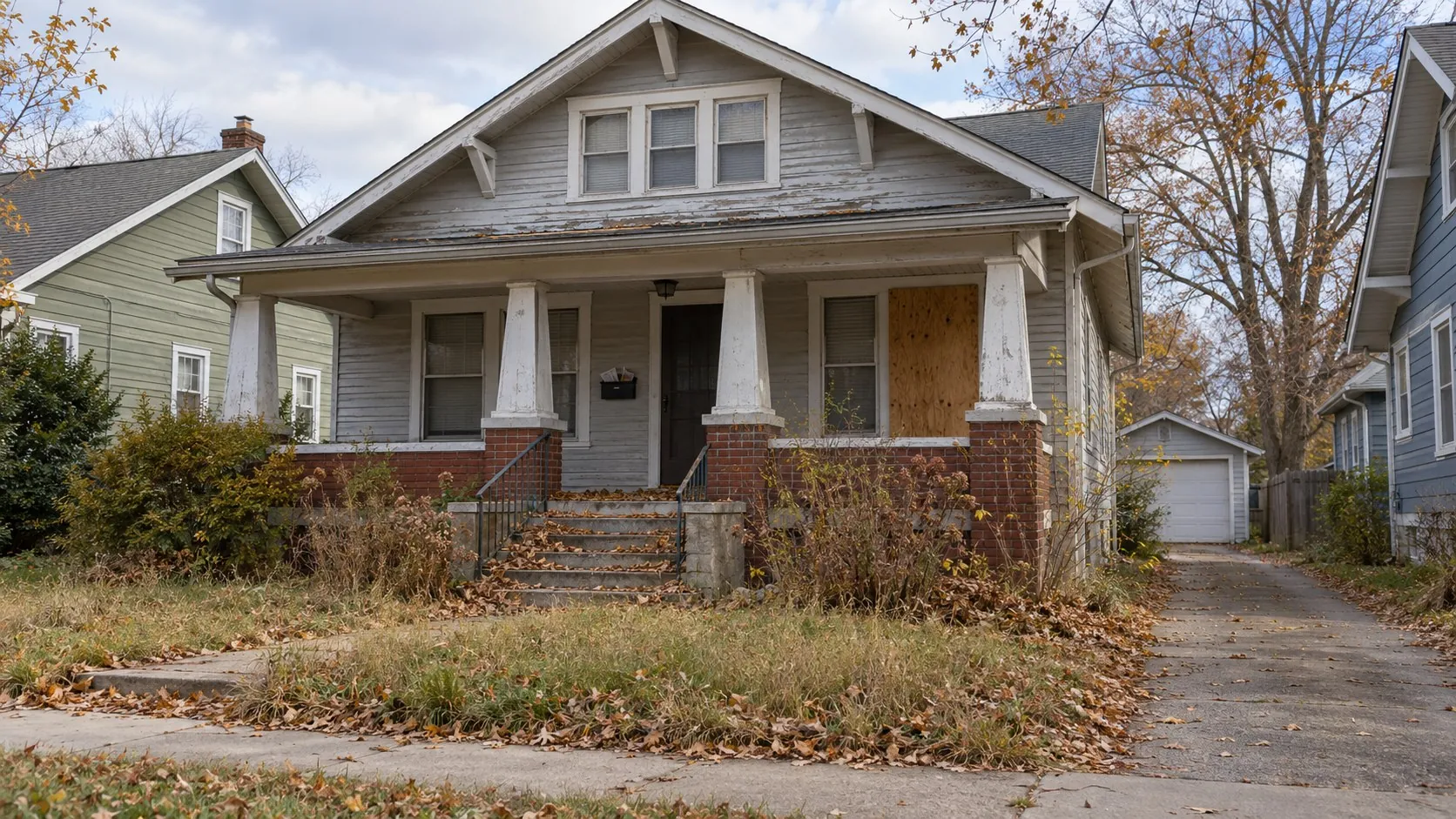
An empty house can get expensive even when nothing dramatic happens. The tax bill still comes. The insurance still matters. Someone has to mow in summer and deal with snow in winter. And a small leak can go unnoticed for weeks in a house nobody walks through.
For most owners the problem isn’t one big disaster. It’s the steady pile-up of small costs and errands for a house you don’t live in.
Add up what the house costs you
It helps to write down what the property costs each month and each year. Depending on the house, that can include the mortgage, property taxes, insurance, gas, electricity, water and sewer, lawn care, snow removal, security, emergency repairs, and paying someone to check on it.
Some of those are predictable. Others only show up when something goes wrong, which is usually at the worst possible time.
Your property taxes may go up
Indiana caps property taxes on a primary residence, called a homestead, at 1% of gross assessed value. A house that isn’t anyone’s primary residence is generally treated as non-homestead residential property and capped at 2%.
So if you’ve moved out, or you inherited the house and nobody lives there, the homestead deduction may no longer apply and the tax bill can rise noticeably. Indiana law also requires owners to tell the county auditor within 60 days when a property stops qualifying for the homestead deduction. The Marion County Auditor’s office can confirm the property’s status.
Tell your insurance agent the house is empty
If the house is going to sit empty for a while, tell your insurance professional exactly how it’s being used. Coverage and policy requirements can be different for a vacant property, and you shouldn’t assume a normal owner-occupied policy will treat every loss the same way once nobody lives there.
Winter is the hard part
Indiana winters add real risk to an empty house: frozen pipes, a furnace that quits, roof leaks, ice, and water damage that nobody finds until much later. If the utilities are off, the house may need to be properly winterized. If they’re on, someone still needs to check on it regularly.
It also helps to have a clear plan for who has keys, who’s allowed inside, whether contractors need access, and whether mail is piling up at the door. A house that looks abandoned tends to attract trouble. If you don’t live nearby, one reliable person who can check on the place makes a big difference.
The city still expects it to be maintained
In Indianapolis, the Department of Business and Neighborhood Services (BNS) enforces property maintenance rules, including high weeds and grass, trash and debris, and unsafe or unsecured buildings. You can look up open enforcement cases on the city’s online portal.
Under Indiana’s Unsafe Building Law, a city can order an owner to seal, clean up, repair, or in serious cases demolish an unsafe building. If the owner doesn’t comply, the city can do the work and go after the cost, including through a lien on the property, and civil penalties may apply.
If the house is outside Indianapolis city limits, the town or county it’s in may have its own code and enforcement process.
Should you renovate it before selling?
That depends on the house and on why you’re selling. Renovating can make sense when the work is manageable, the finished value supports it, you have contractors you trust, and you’re comfortable carrying the house through construction.
Selling it as it is tends to be more practical when the house needs major work, it has already been empty for a long time, you live far away, or you simply don’t want to manage a project.
What about everything still inside?
A house can be vacant and still full of furniture, boxes, and personal things. For a traditional listing, cleaning it out and making it presentable usually matters. In a direct sale, some buyers will account for what’s left inside as part of the deal.
If the house was inherited, make sure the estate’s representative or the heir with authority signs off before anything is thrown away or given away. Our guide to selling an inherited house in Indiana explains who has that authority.
Selling a vacant house as-is
A buyer who renovates can usually evaluate the house without you fixing it first. They’ll still look at the location, the condition, the scope of repairs, what it could sell for afterward, the title, any open code cases, and what the project will cost. We’re comfortable reviewing vacant Indianapolis-area houses, including ones that need a lot of work.
It helps if you can tell us how long the house has been empty, whether the utilities are on, whether there’s been any water or freeze damage, roughly how old the roof is, the condition of the major systems, whether there are any city notices or open cases, whether it’s insured, and whether we can get inside. You don’t need every answer to start the conversation. Whether the utilities need to come back on depends on the house and on what due diligence the sale requires.
If you live outside Indiana, the house can still be evaluated. Talk to the title company handling the closing about logistics, including signing remotely.
For more on selling without repairs, see how to sell a house as-is in Indianapolis, or tell us about the property.
Sources
- City of Indianapolis, Department of Business and Neighborhood Services
https://www.indy.gov/agency/department-of-business-and-neighborhood-services - City of Indianapolis, Search for Enforcement Cases
https://aca-prod.accela.com/INDY/Cap/CapHome.aspx?module=Enforcement&TabName=HOME - Indiana Code 36-7-9, Unsafe Building Law
https://law.justia.com/codes/indiana/title-36/article-7/chapter-9/ - Indiana Department of Local Government Finance, Property Tax Caps (Circuit Breaker) Fact Sheet
https://www.in.gov/dlgf/files/user-guides/251113-Fact-Sheet-Circuit-Breaker-Caps.pdf
Have an Indianapolis-area property you are considering selling?
Send us the address and a few details. We will review the property and let you know if it fits what we are looking for.
Tell us about the propertyThis article is general educational information and is not legal, tax, or financial advice. Transaction requirements can vary by property and situation.