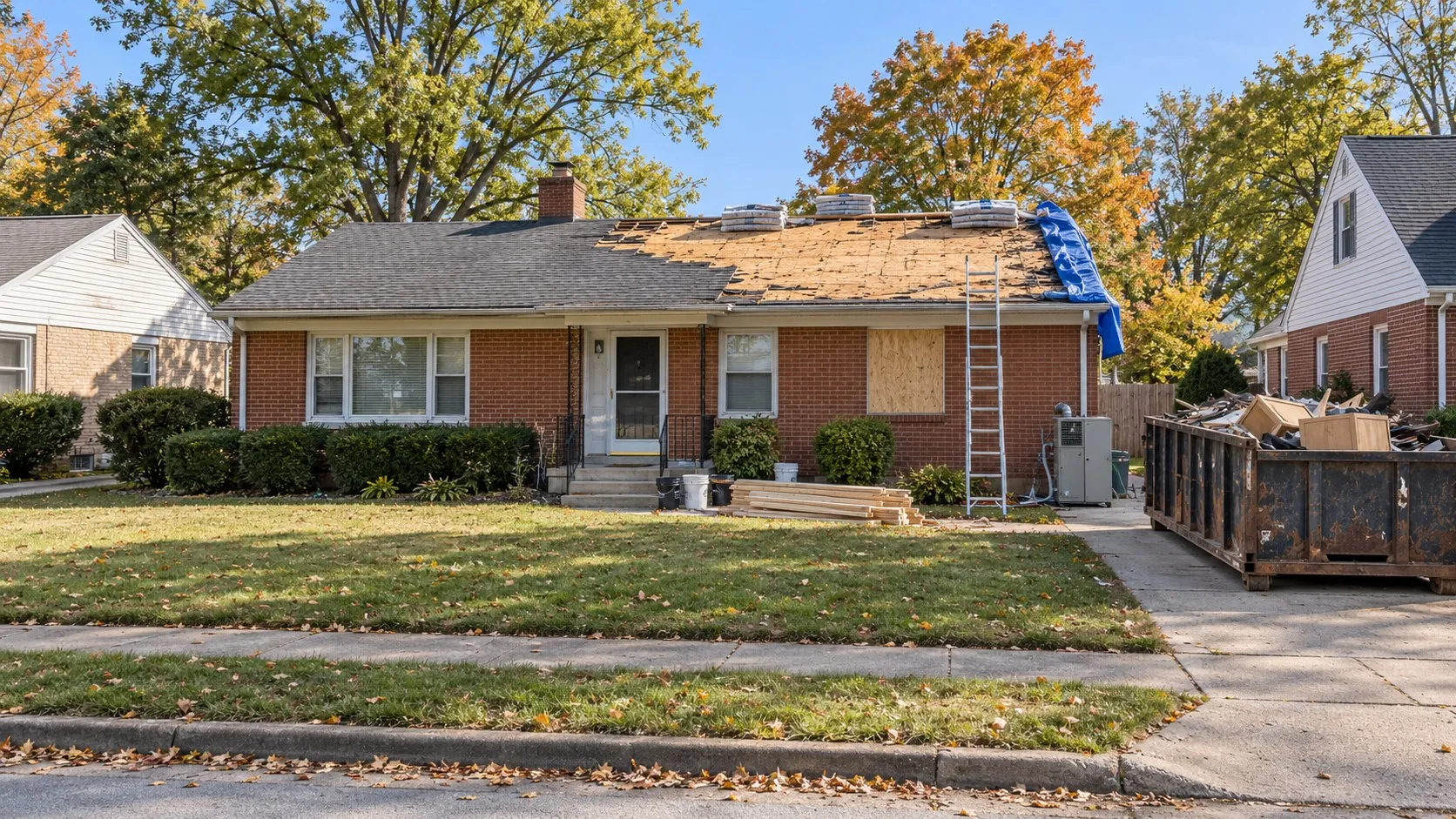
Most older houses in Indianapolis don’t have one big problem. They have several medium ones. The roof is getting old, the electrical panel is original, the basement gets damp, the furnace is loud, and the kitchen hasn’t changed in a long time. Each one sounds manageable on its own. Together they turn “a few repairs” into a renovation.
At that point the question isn’t only what the work will cost. It’s whether you want to be the person running that project before you can sell.
Repairs and renovation are different jobs
A repair fixes something that’s broken. A renovation brings the house up to what buyers expect in that neighborhood. Older homes usually need some of both.
That’s where budgets drift. You might plan for a new water heater and a roof patch, then compare your house with the updated ones down the street and realize buyers will also expect new flooring, paint, lighting, and at least a refreshed kitchen and bathroom. The cost and the timeline change a lot once that second list shows up.
The big-ticket items
A handful of systems tend to decide whether a project is a weekend or a season.
The roof can be more than shingles. Flashing, gutters, decking, framing, and water damage inside the house can all be part of the same job.
Electrical ranges from a panel upgrade to rewiring large parts of the house, which often makes sense while walls are already open. Older wiring is also something a buyer or lender may want dealt with.
Plumbing and the sewer line are two separate questions. Fixing what you can see inside the house tells you nothing about the line running to the street, and either one can move the budget.
Foundation, basement, and crawl space problems deserve a careful look. Some cracks are minor. Others point to settlement, bowing walls, damaged framing, or water damage. Poor drainage around the foundation is behind a lot of these in older homes.
Heating and cooling includes the furnace, air conditioning, ductwork, and water heater. In Indianapolis buyers care about both heat and air, so neither one can be skipped.
Kitchens and bathrooms are what buyers notice first, and the cost swings widely between a cosmetic refresh and a full rebuild.
Should you fix everything before selling?
Not automatically. Renovating first can bring a higher price, but you carry the cost, the schedule, and the risk.
The contractor’s estimate is only one line. While the work goes on you’re still paying property taxes, insurance, utilities, and any loan on the house. There are permits, delays, change orders, and the repairs nobody found until the walls came open. There’s your own time managing it, and the cost of selling once it’s done. What matters is what you net at the end, not just the sale price.
Here’s how that plays out. Say the house could sell for $300,000 once it’s renovated, and the first estimate for the work is $65,000. That can look like an easy decision. But if the project takes four months, you’re carrying the house that whole time, and you’ll likely see change orders and extra repairs before you pay to sell it. Renovating might still be the right call. You just want the whole picture before you commit.
How a renovation buyer prices the house
An investor who renovates works backward from what the finished house should sell for. From that number they subtract the renovation, financing, holding costs while the work happens, the costs of buying and later reselling, a cushion for surprises and risk, and the return that makes the project worth doing. What’s left is what they can pay for the house today.
That’s why an unrepaired house shouldn’t be compared with the sale price of a finished one. The gap between the two is the cost of getting from one to the other.
When selling as-is is worth a look
A direct sale is worth comparing when several major systems need replacing at once, when there are structural or water problems, or when the house is vacant, inherited, or far from where you live. It’s also worth comparing when holding costs are starting to add up or when you simply don’t want to fund and manage a renovation.
Whichever way you go, Indiana’s disclosure rules still apply. If you know about a problem, selling as-is doesn’t remove the duty to disclose it. For a home with one to four units, the seller generally has to give the buyer the state disclosure form before accepting an offer, covering what the seller actually knows about the foundation, roof, structure, mechanical systems, and water and sewer systems. Our as-is guide covers that in more detail.
What helps us give you an accurate number
The better the information at the start, the closer our first analysis will be. You don’t need all of it, but these help:
- roughly how old the roof is
- the condition of the furnace and air conditioning
- any plumbing, electrical, structural, basement, or crawl space problems you know about
- any water damage
- photos
- notices from the City of Indianapolis Department of Business and Neighborhood Services
- recent repairs, whether the utilities are on, and your timeline
If you don’t know exactly what’s wrong with the house, share what you do know. Indiana’s disclosure form is based on what the seller actually knows, and anything else gets worked out through due diligence. Depending on the house, we may still need a walkthrough or a contractor’s opinion. The point is to understand the likely scope early, so the offer is based on the real project and not guesswork.
You don’t necessarily have to clear the house out first; what stays behind is something we agree on before the deal is final. When you’re ready, tell us about the property.
Sources
- Indiana Code 32-21-5, Residential Real Estate Sales Disclosure
https://law.justia.com/codes/indiana/title-32/article-21/chapter-5/ - Indiana Real Estate Commission, Seller’s Residential Real Estate Sales Disclosure (State Form 46234)
https://forms.in.gov/Download.aspx?id=5236 - City of Indianapolis, Department of Business and Neighborhood Services
https://www.indy.gov/agency/department-of-business-and-neighborhood-services
Have an Indianapolis-area property you are considering selling?
Send us the address and a few details. We will review the property and let you know if it fits what we are looking for.
Tell us about the propertyThis article is general educational information and is not legal, tax, or financial advice. Transaction requirements can vary by property and situation.